A Week Around Iceland: Planning a Road Trip Where the Drive Is Part of the Trip
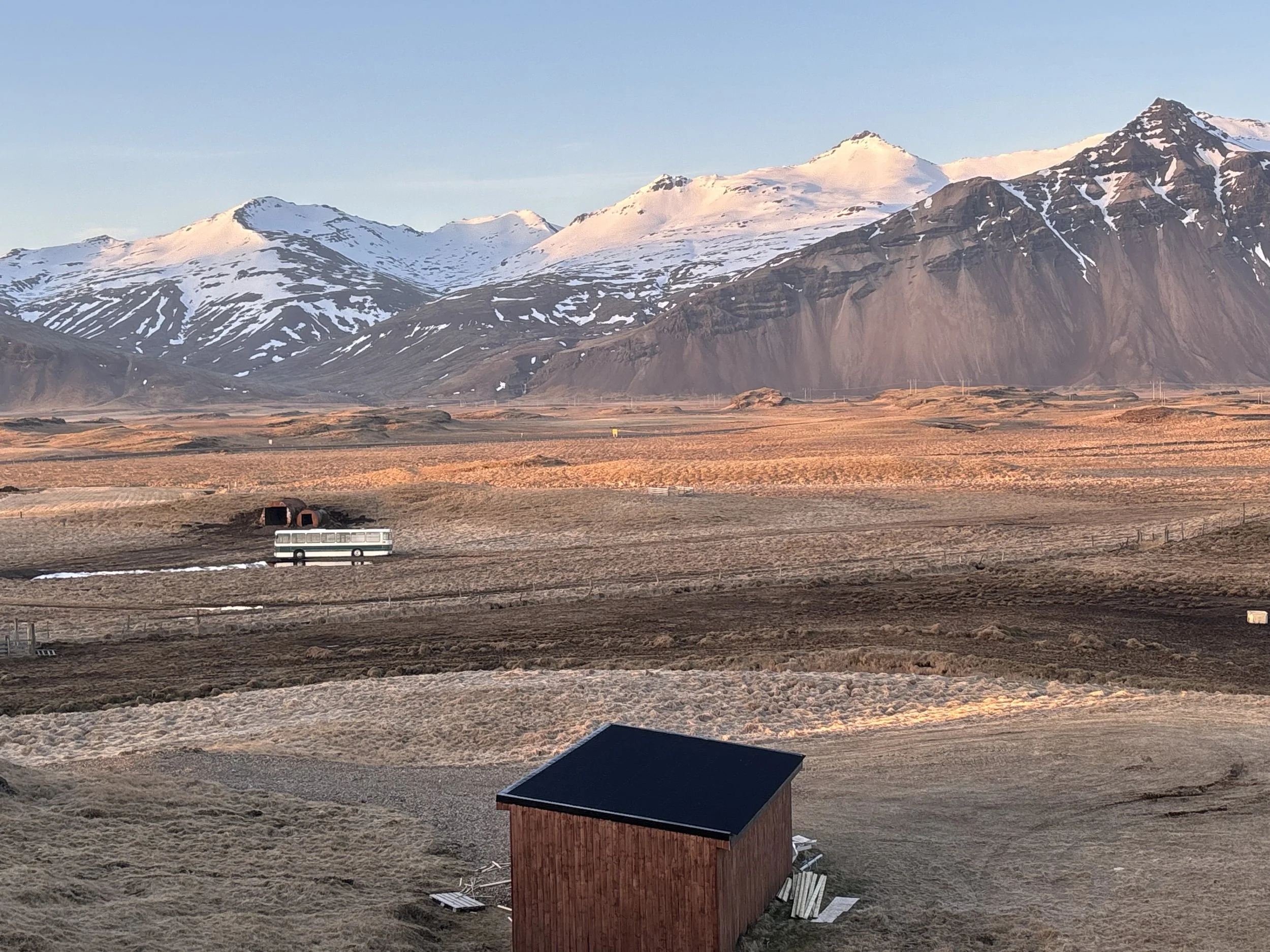
View from our AirBnB in Hofn.
There is a particular problem with planning a trip to Iceland: almost everything looks worth stopping for. Before we ever arrived, I had accumulated a map full of waterfalls, glaciers, geothermal areas, black-sand beaches, small towns, hikes, restaurants, and places that seemed impossible to pass without pulling over. Put them all into an itinerary, though, and Iceland starts looking less like a place to experience and more like a scheduling problem.
So our week in Iceland eventually took shape around a different idea. Instead of trying to see everything, we would keep moving through the country and let the route connect the experiences for us.
We began in Reykjavík, drove the South Coast through Vík and Höfn, crossed eastern Iceland to spend two nights in Húsavík and explore the Mývatn region, then made our way back to Reykjavík. Along the way we stayed in a series of Airbnbs rather than choosing a hotel as a permanent base. It meant moving our luggage more often and becoming very familiar with packing the car, but it also meant that we rarely had to undo the miles we had just driven.
That decision shaped almost everything that followed.
Planning Iceland as a Journey, Not a Collection of Stops
Iceland is deceptively easy to overplan. Reykjavík to Vík, for example, is only around a two-and-a-half-hour drive if you enter the two towns into a navigation app. That number is almost useless for planning the actual day.
Between them is the South Coast.
There are waterfalls that warrant pulling off the Ring Road, black-sand beaches, overlooks, places to eat, and landscapes that make an unplanned stop seem entirely reasonable. Add Skógafoss to the day and suddenly the question is not whether you can get to Vík before dinner. Of course you can. The better question is how much of the day you want to spend getting there.
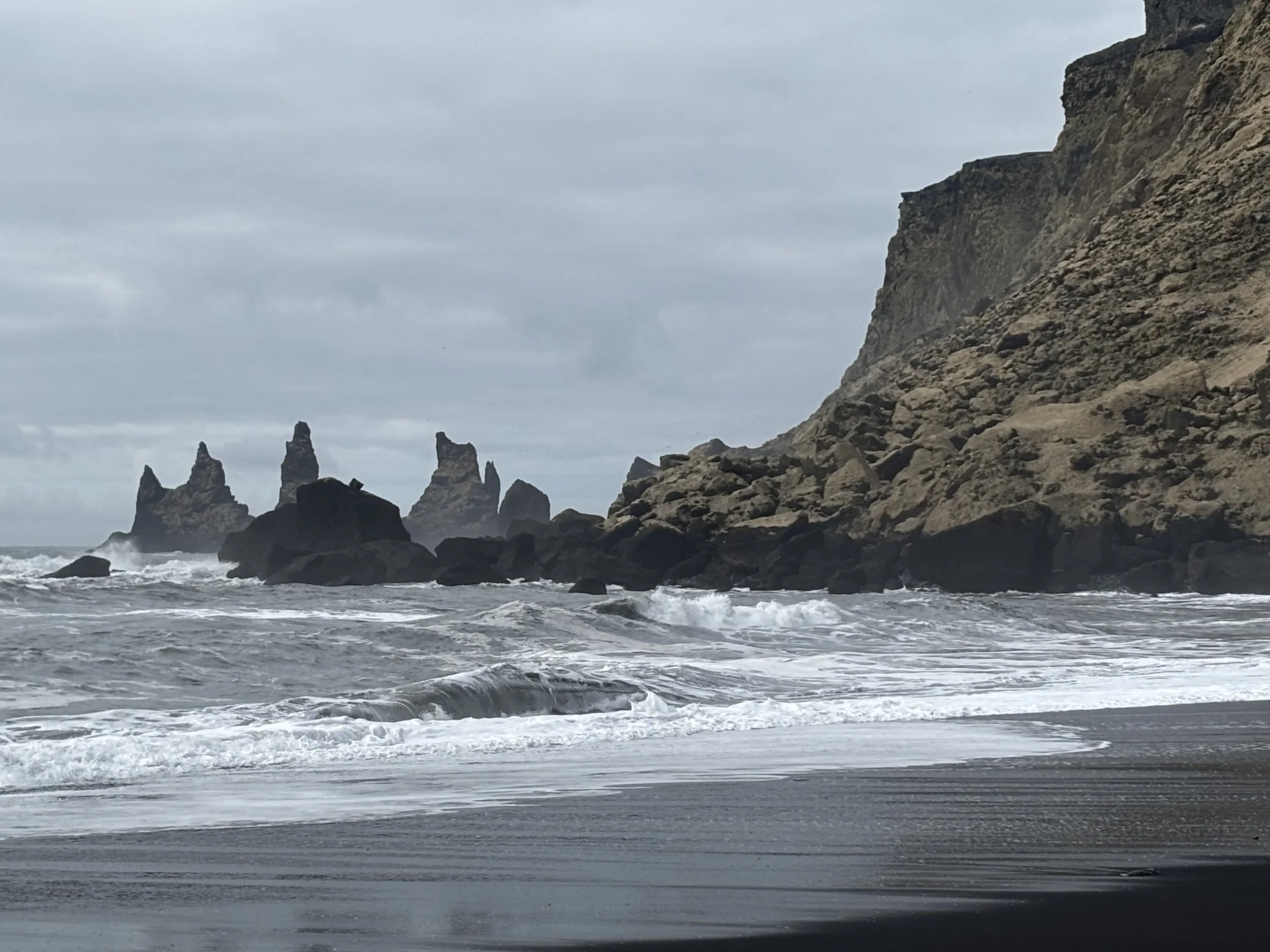
View from the black sand beaches in Vik.
That became the basic planning unit of our trip. We had a destination each night, a handful of things we particularly wanted to experience, and enough understanding of the route to know what could be dropped if the day began running long.
The Airbnbs were important to making that work. On a trip like this, I would choose accommodation based less on the property itself and more on what sleeping there does for the next day. Vík was useful because it allowed the South Coast to end there instead of requiring a return to Reykjavík. Höfn moved us far enough east to make the next stage of the journey possible. Two nights in Húsavík gave us a rare break from changing accommodations and a base for both whale watching and the Mývatn area.
Where we slept was part of the route.
Reykjavík to Vík: The First Lesson in Icelandic Driving Times
Leaving Reykjavík for Vík was when the itinerary became real. Reykjavík is compact and urban enough that Iceland can still feel like a conventional European trip while you are there. Once we headed east, that changed quickly.
Skógafoss was one of the places we knew we wanted to see along the way. It is about 60 meters high, but that statistic does little to prepare you for the scale of it from below. More useful from a planning perspective is knowing that Skógafoss is remarkably easy to incorporate into a South Coast drive. It sits just off Route 1, so you do not have to choose between seeing it and sacrificing a large portion of the day to a detour.
That distinction matters in Iceland. A place can be extraordinary and still not make sense for a particular itinerary. Likewise, something that requires only a short diversion can become one of the most memorable parts of a day.
I would leave Reykjavík early for this drive, but not because Vík is particularly far away. An early start buys you something more useful: permission to stop. If the weather is good, if a waterfall catches your attention, or if somewhere deserves another half hour, you have not already spent all of the day's flexibility before lunch.
By the time we reached Vík, I was beginning to understand that the estimated drive time on the map was not the number I needed to care about. The important number was how many hours we were willing to give the journey.Staying in Vík made that easier. Instead of reaching the town and thinking about the drive back to Reykjavík, we could stop. Our Airbnb was the end of the day, and the next morning we would continue east.
Vík to Höfn: Stop Measuring the Day in Miles
The drive from Vík to Höfn is longer, but it was also the kind of day around which we had built the entire road trip. Skaftafell and Jökulsárlón were not side trips from somewhere else. They were on the way to where we were sleeping.
That sounds like a minor logistical distinction. In practice, it changes the experience.
Jökulsárlón is roughly five hours from Reykjavík before accounting for meaningful stops. It can be visited as part of a very long day from the capital, but then every minute spent at the glacier lagoon eventually has to compete with the drive back west. We did not have that calculation. When we were finished, we continued toward Höfn.
This is one of the reasons I would recommend changing accommodations on an Iceland road trip even if, like me, you generally appreciate the convenience of settling into one place. Moving east allowed each day to begin where the previous one ended.
Skaftafell also illustrates why I would resist assigning rigid times to every stop. A hike is different from pulling into an overlook, and Icelandic weather can make the same walk feel completely different from one day to another. We had Svartifoss in the plan, but the useful part of planning it was understanding what the hike required and where it fit geographically, not deciding weeks earlier exactly when we should leave the parking lot.
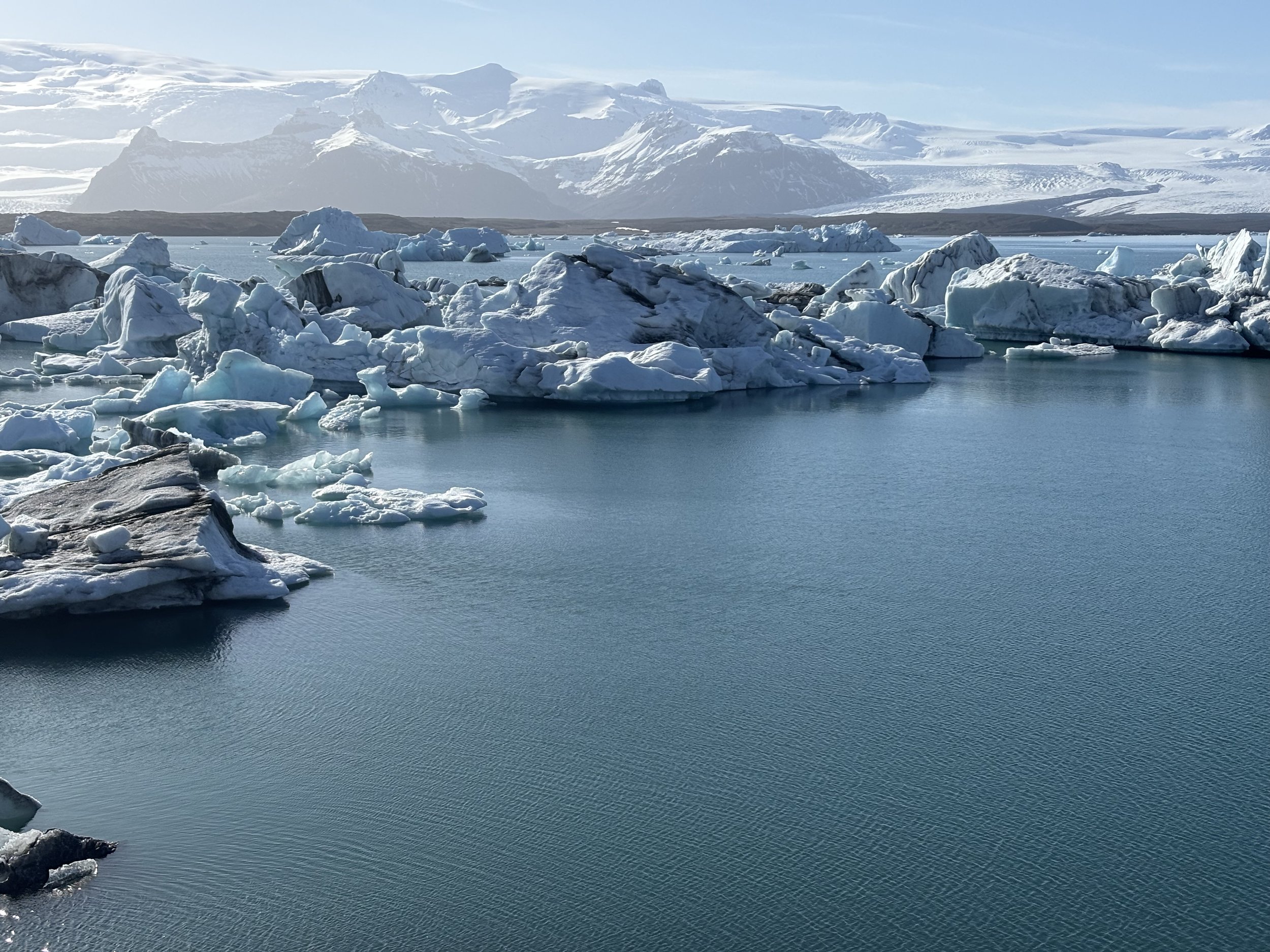
A view of the icebergs.
By the time we reached Jökulsárlón, the progression of the South Coast was part of what made the lagoon compelling. We had not teleported from Reykjavík to see ice floating in a lagoon. We had spent the day moving through the landscape surrounding it.
That is a distinction I did not fully appreciate when I planned the trip.
Höfn to Húsavík: Sometimes the Long Drive Is the Right Choice
Then came the day that looked questionable on paper.
Höfn to Húsavík is a substantial drive, and this was never going to be a day when we could casually add every interesting place in eastern and northern Iceland. The route needed priorities. Rjúkandafoss fit naturally into the journey, and as we moved north, the landscape began changing again.
A long driving day is not automatically bad itinerary design. A long driving day with no reason for being long usually is.
Ours had a purpose. We wanted to reach Húsavík and stay there for two nights. That would position us for an 11 a.m. whale-watching tour and give us time to explore the Mývatn region without packing the car again the following morning. The price was one day with a lot of road. The reward was a completely different pace once we arrived.
This is where I would be particularly careful if recreating our route. Do not look at the estimated Höfn-to-Húsavík drive time and assume that is your day. Fuel, food, weather, road conditions and stops all matter, and services become less frequent than they are around Reykjavík. This is a day to know where you are going, keep an eye on the fuel gauge, and decide in advance which stops are priorities and which are optional.
It is also a spectacular way to understand just how varied Iceland is. The country we encountered approaching northern Iceland did not feel like the South Coast we had left behind. The long drive connected the two. Had we been trying to optimize the trip solely for efficiency, we might have eliminated that day. I am glad we did not.
Húsavík: Why We Finally Stayed Put
After Reykjavík, Vík, Höfn and several days of moving east and north, staying in the same Airbnb for a second night felt almost extravagant. We had deliberately put that pause into the itinerary.
Our whale-watching tour from Húsavík was scheduled from 11 a.m. to 2 p.m., which gave the day a single fixed point rather than an entire schedule. That is a planning approach I have come to prefer: anchor a day around the experience that has to happen at a particular time, then allow everything else to remain flexible around it.
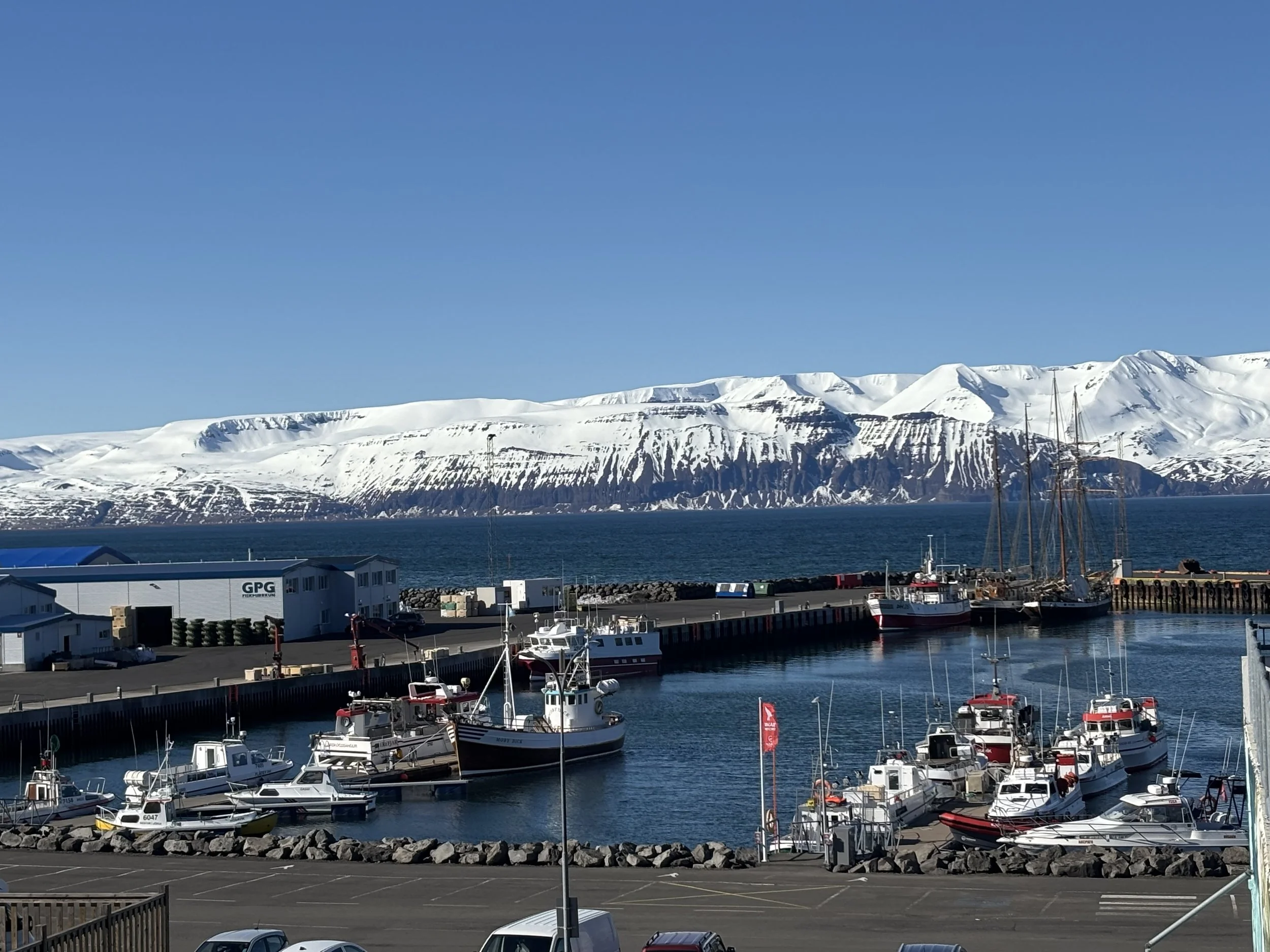
The boat dock our whale-watching tour launched from.
It was especially useful here because northern Iceland offers far more than Húsavík itself. The Mývatn region brought us into another version of the country, one defined by volcanic and geothermal landscapes. Hverir, Dimmuborgir, Grjótagjá, Skútustaðagígar and Hverfjall can all appear as separate attractions when you are researching the trip from home. Once you are there, they make more sense as parts of the same landscape.
That changes how I would plan the area. I would not approach Mývatn with a checklist requiring every stop. I would understand the options, choose the places that interest me most, and adjust the day based on time, weather and how long I actually want to spend at each place. There is a practical advantage to this approach too. If you know which stops are optional before the day begins, skipping one does not feel like the itinerary has failed.
What I Would Preserve About This Route
A week is not enough time to see Iceland. It is enough time to experience a remarkable amount of it, provided you accept that those are different goals. Our route asked a lot of seven days. There were frequent accommodation changes and some significant driving. I would not recommend it to someone who wants a slow trip with leisurely mornings and several nights in every destination. I also would not make it more aggressive. The temptation would be to look at the map afterward and find the things we could have squeezed in. I think that would miss what made the route work.
I would preserve the progression.
Reykjavík gave us a starting point. The drive toward Vík introduced the South Coast. Continuing to Höfn allowed us to experience the glaciers and southeastern landscape without turning around. The long drive north gave the island scale. Two nights in Húsavík provided a deliberate pause before we eventually returned toward Reykjavík. Most importantly, the route left room for Iceland to interfere with the itinerary. That is what I want from planning. I do not spend time building an itinerary because I want every hour of a trip predetermined. I plan because I would rather make the boring decisions at home. Where should we sleep? How far can we reasonably drive? Which experiences require reservations? What matters enough that we would regret missing it?
Once those decisions are made, there is more room for the decisions that are better made while traveling.
Should we stop here?
Should we stay longer?
Do we really need to see the next thing?
Or is this where we want to be right now?
The itinerary got us around Iceland. The space inside it is where the trip happened.
