Two Days Along Iceland's South Coast: Reykjavík to Vík to Höfn
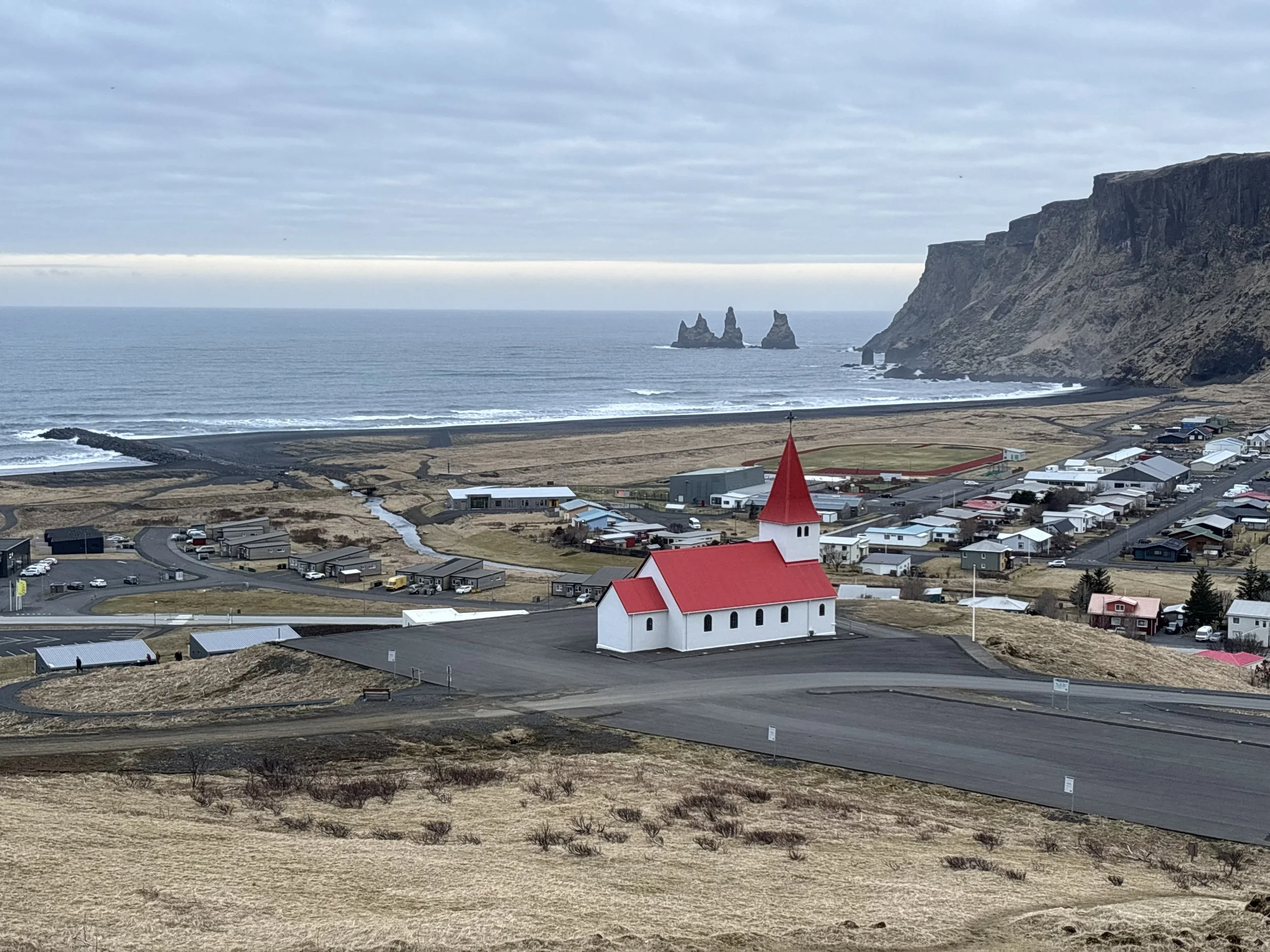
The dramatic view from atop of Vik.
Iceland's South Coast presents a problem before you ever see it: there is too much worth stopping for. Reykjavík and Vík are only about 190 kilometers apart, and under good conditions the drive takes roughly two and a half hours. Look at the route on a map and it seems like a fairly straightforward travel day. Start adding waterfalls, beaches, hikes, and all the places that appeared during months of trip planning, though, and those two and a half hours quickly stop being useful.
We gave the South Coast two days, traveling from Reykjavík to Vík and then from Vík to Höfn. More importantly, we kept moving east. Rather than using Reykjavík as a base and turning the South Coast into a series of increasingly long day trips, we stayed in Airbnbs along the route. Each night's destination became the next morning's starting point, which meant the miles we drove were almost always taking us somewhere new.
It was a small logistical decision that shaped the way we experienced this part of Iceland. Skógafoss became part of the journey to Vík rather than an attraction we needed to visit before returning to Reykjavík. Skaftafell and Jökulsárlón belonged to the road toward Höfn rather than the far end of an ambitious day trip. We still covered a lot of ground, but the route gave those experiences room that an out-and-back itinerary would not have allowed.
Reykjavík to Vík: Ignore the Drive Time
The first thing I would tell someone planning to drive from Reykjavík to Vík is not to build the day around the two-and-a-half-hour estimate. That tells you how long it takes to cover the distance, not how long you should give the journey.
Leaving Reykjavík, the urban landscape begins giving way to the open spaces that would define much of the rest of our trip. This is where the difference between researching Iceland and actually moving through it became apparent. At home, I had encountered the South Coast as a collection of individual places. I knew the names of waterfalls and beaches, had looked at photographs, and had figured out roughly how long we might spend at each one. On the road, those individual attractions became part of a continuous landscape.
That changes the way I would plan the drive. Rather than creating a schedule around every possible stop between Reykjavík and Vík, I would choose a few places that matter enough to anchor the day and leave the rest flexible. For us, Skógafoss was one of those anchors. Other stops could expand or disappear depending on how the day developed, but we knew before leaving Reykjavík that Skógafoss was somewhere we wanted to spend time.
This distinction between priorities and possibilities became increasingly useful as the trip continued. Iceland makes almost everything look mandatory during the planning process. There is always another waterfall, viewpoint, beach, or short detour that seems unreasonable to skip when you are sitting at home looking at a map. Once you are there, the cost of adding everything becomes clearer. Every additional stop takes time from somewhere else, and eventually a day designed around seeing more can leave very little time for actually experiencing any of it.
An early start from Reykjavík helps, but I would not leave early simply for the sake of maximizing the number of stops. The real benefit is flexibility. If you arrive somewhere and want another half hour, you have it. If weather slows the drive, the itinerary does not immediately fall apart. If something you had barely noticed while planning makes you want to pull over, you have not already committed every minute of the afternoon.
Skógafoss and the Difference Between Accessible and Quick
Skógafoss fits remarkably well into a South Coast road trip because it sits close to Route 1. You do not have to commit to a significant detour or reorganize the day around reaching it, which makes it easy to understand why it appears on so many Iceland itineraries. The waterfall drops about 60 meters from cliffs that once formed part of Iceland's coastline, and its proximity to the road means you can go from driving through the landscape to standing beneath it very quickly.
That convenience can make Skógafoss look like a quick stop, but accessible and quick are not necessarily the same thing. You can see the waterfall without spending hours there, and on a crowded itinerary that might be exactly what you need. You can also walk closer, take in the scale from below, and climb the staircase beside the falls for a different perspective. How much of that belongs in your day is better decided when you are standing there than when you are planning the trip months earlier.
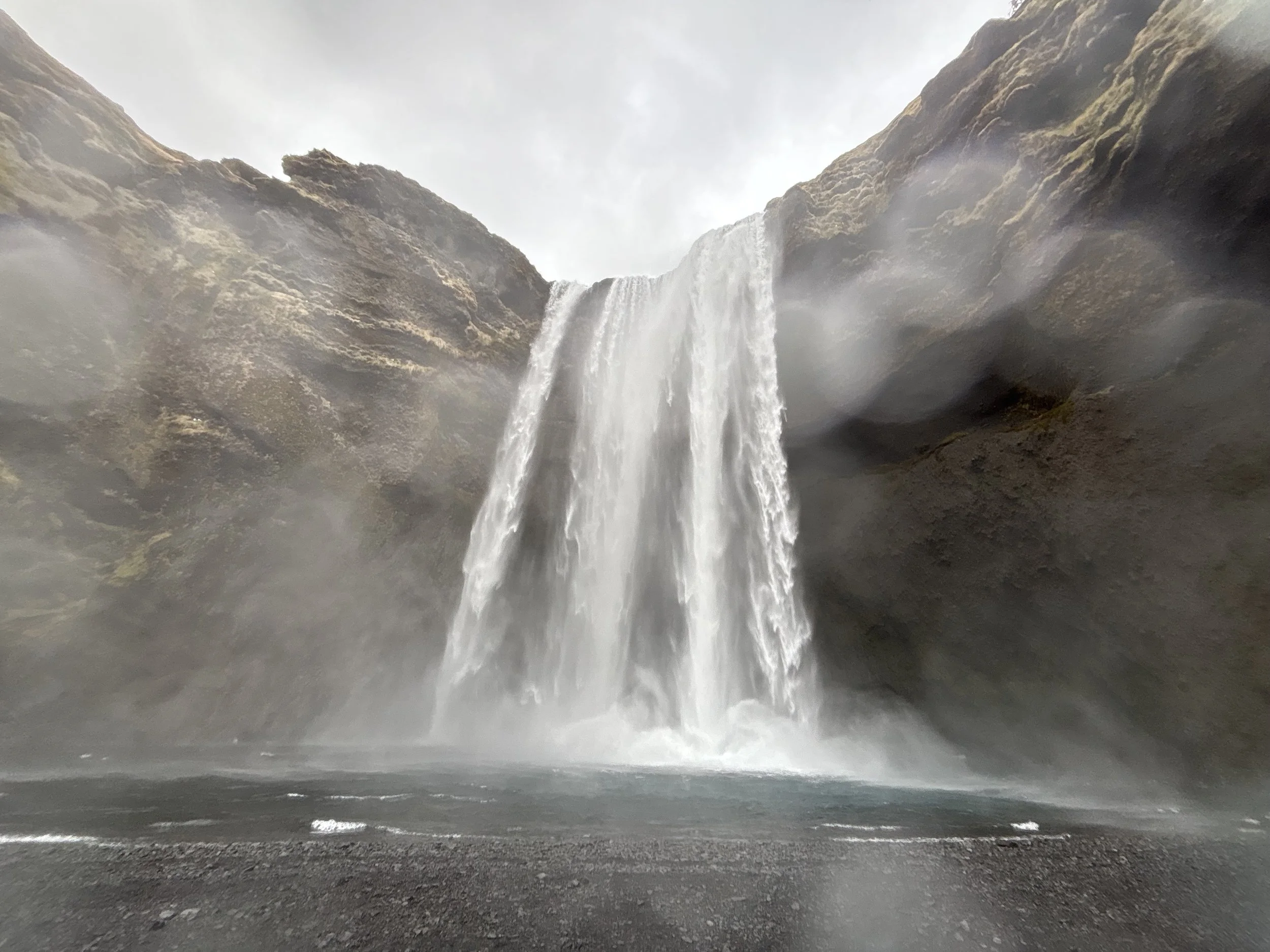
It is hard to put into words how massive Skógafoss truly is. The blur on the picture comes from how much water is splashing onto the camera from even 50 yards away.
That is the kind of flexibility I want an itinerary to provide. I want to know what is available, what it requires, and what I would be giving up by spending more time there. I do not need to know that we must leave at 11:35 because the next line on the itinerary begins at noon. Good planning should make those decisions easier in the moment rather than making them unnecessary.
The same approach is useful for the rest of the drive toward Vík. If there are several places you are interested in between Reykjavík and Vík, rank them before the trip. Decide which ones would genuinely disappoint you to miss, then treat the rest as options. That gives the day structure without turning the Ring Road into a race between parking lots.
Why Vík Was the Right Place to Stop
Our Airbnb in Vík was more than somewhere to sleep. Its location was one of the reasons the first day worked as well as it did.
If we had been returning to Reykjavík that evening, there would have been a point when the direction of the day changed. Every stop would eventually need to be weighed against the drive back west, and the farther east we traveled, the more significant that return became. Staying in Vík removed that calculation. We could spend the day moving east and stop when we reached the town rather than retracing everything we had just driven.
There was a tradeoff. Staying in a series of Airbnbs meant that we never completely settled into one place. We brought things in, slept, packed again the next morning, and continued. I would not choose that style of travel everywhere, especially in a city where staying in one neighborhood for several days can help you understand the place better. Iceland rewarded the opposite approach because moving our accommodations allowed us to follow the geography.
Vík also positioned us for the more ambitious second day. Instead of waking up in Reykjavík and spending the first two and a half hours reaching somewhere we had already been, we started the morning on the South Coast with Skaftafell, Jökulsárlón, and eventually Höfn ahead of us. The overnight stay effectively turned one very long Reykjavík-to-Höfn journey into two days that could each have their own character.
That is how I would think about choosing accommodations for an Iceland road trip. The question is not simply whether a town is worth staying in. Ask what sleeping there does to tomorrow's itinerary. Sometimes the most useful accommodation is the one that places you where the next day needs to begin.
Vík to Höfn: A Day That Needs More Room
The second day required a different pace. Vík to Höfn is a longer drive even before adding stops, and some of the places along the route require more time than pulling into a parking lot and walking to a viewpoint. Skaftafell was the clearest example for us because we wanted to hike toward Svartifoss.
This is where planning Iceland by counting attractions becomes particularly unhelpful. A waterfall beside Route 1 and a hike in a national park may each occupy one line on an itinerary, but they do not ask the same thing of the day. The drive, parking, walking, weather, and amount of time you actually want to spend somewhere all matter more than the number of places on the list.
Skaftafell, part of Vatnajökull National Park, needed to be treated as one of the day's major activities rather than another stop on the way east. Once we accounted for the time needed to hike toward Svartifoss, the rest of the day could be built around it. That is a more useful way to plan this section of the South Coast: identify the experience that requires the largest commitment of time, protect that time first, and let shorter stops fit around it.
It also gives you a better way to respond to weather and energy. A hiking day can change significantly depending on conditions, and the pace that seemed reasonable while planning at home might not be the pace you want once you arrive. Knowing what can be shortened or removed later in the day gives you permission to adjust without feeling as though you have somehow failed to complete Iceland.
The Landscape on the Way to Jökulsárlón
The drive east from Vík is one of the reasons I would resist trying to experience this part of Iceland too quickly. As the route moves toward Vatnajökull, glaciers become increasingly present in the landscape, and the relationship between the places you have researched becomes easier to understand.
Jökulsárlón is spectacular on its own. Ice breaks from Breiðamerkurjökull and moves through the glacier lagoon toward the Atlantic, creating a landscape that looks almost unreal even when you are standing in front of it. It is easy to understand why the lagoon becomes a destination in its own right and why travelers are willing to make a very long trip from Reykjavík to see it.
For me, though, the approach was part of the experience. We had spent the day moving through the landscapes surrounding Vatnajökull, stopped in Skaftafell, and watched glaciers become increasingly prominent as we continued east. Jökulsárlón did not suddenly appear as an isolated attraction at the end of a long drive. It belonged to everything we had been moving through.
That is one of the things driving Iceland gave us that I had not fully anticipated during planning. A photograph can show you Jökulsárlón, but it cannot show you how the landscape develops before you reach it. Traveling overland gives places context, and that context makes the miles between destinations something more than time that needs to be minimized.
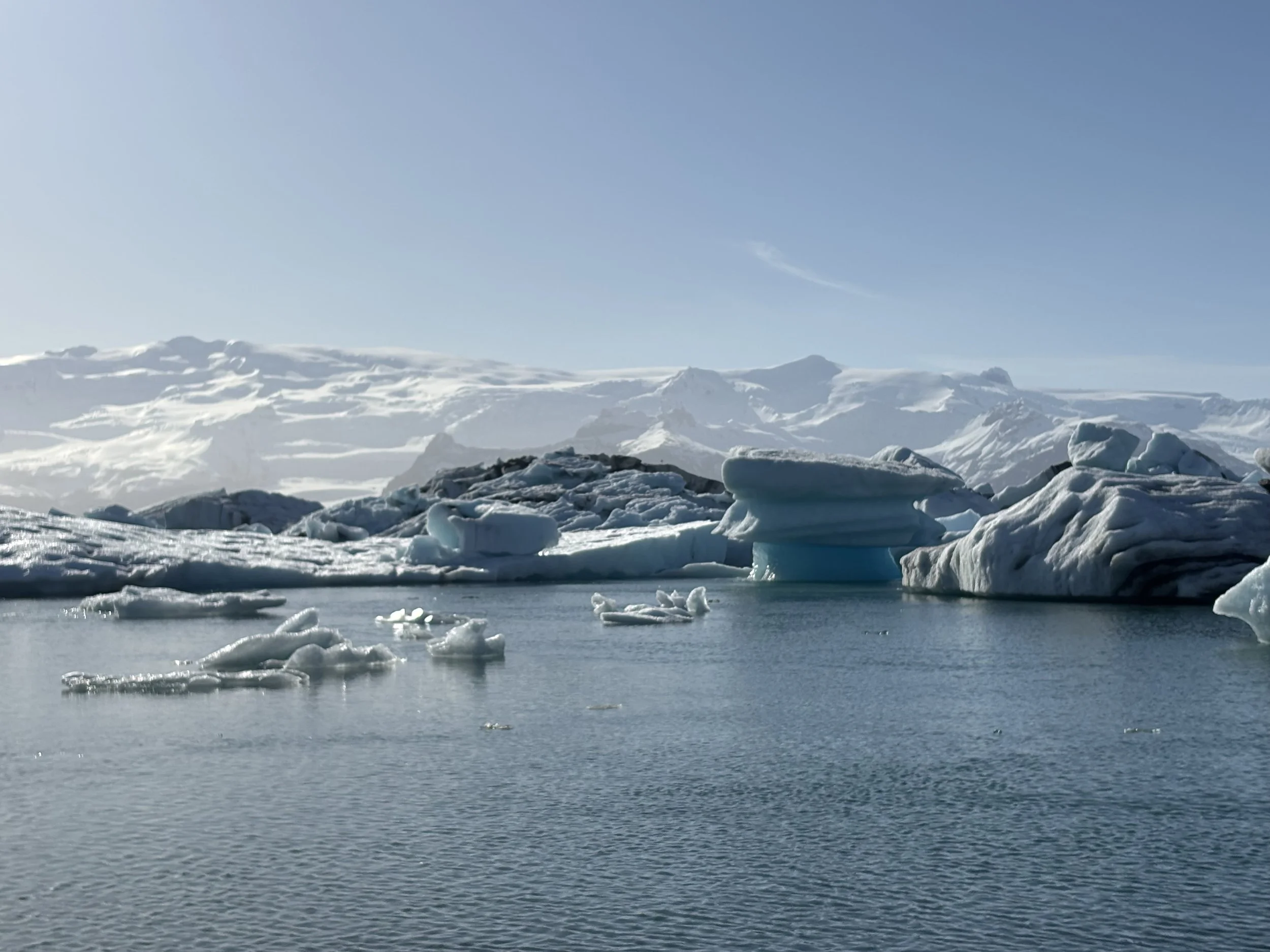
We were shocked by the blue on the glaciers.
Why We Continued to Höfn
Our decision to sleep near Höfn mattered most once we reached Jökulsárlón. It is possible to visit the lagoon from Reykjavík, but the question I would ask is not whether it can be done. I would ask what having to return to Reykjavík does to the experience.
The capital is hundreds of kilometers away. If you know you have to drive all the way back that evening, every additional minute at Jökulsárlón eventually competes with the return journey. A late lunch matters. Weather matters. An unexpected stop matters. Spending another half hour somewhere because you are enjoying it suddenly has consequences several hours later.
We did not have to make that calculation because when we left Jökulsárlón, we continued east toward our Airbnb near Höfn. The lagoon was not the farthest point of an excursion before we turned around. It was part of the day's progression from Vík toward southeastern Iceland.
Looking back, that is one of the strongest arguments I can make for treating Reykjavík to Höfn as a two-day journey. Sleeping in Vík gives the second day enough room for places such as Skaftafell and Jökulsárlón, while sleeping around Höfn removes the pressure of a long return drive once you reach them. The accommodations become part of the itinerary rather than something you choose after deciding what you want to see.
It is also why I would hesitate to recommend adding much more to these two days simply because the route technically allows it. There are plenty of other places we could have included, and another traveler might choose different priorities entirely. What mattered was that the route had enough structure to move us forward without requiring us to treat every interesting place as an obligation.
How I Would Plan These Two Days Again
If I were rebuilding this part of the trip, I would start with the same three points: Reykjavík, Vík, and Höfn. Those overnight locations establish a natural progression east and divide the South Coast into two days with different purposes.
The Reykjavík-to-Vík day can absorb more shorter stops because the driving distance is manageable. I would leave Reykjavík with two or three priorities, including Skógafoss if it interests you, and keep the rest of the route flexible. The goal would not be to reach Vík as quickly as possible, but I would still want enough margin that arriving there did not feel like the final task in an exhausting day.
The Vík-to-Höfn day needs more discipline because the distance is greater and experiences such as hiking in Skaftafell require meaningful blocks of time. I would choose the major activity first, build Jökulsárlón into the route, and be more selective about everything else. If the day develops faster than expected, there will always be another place to stop. Iceland rarely leaves you with the problem of having nothing interesting nearby.
I would also keep the one-night stays despite the inconvenience. Moving between Airbnbs meant packing the car each morning, but it allowed us to experience the South Coast as a continuous journey. We never spent the end of a day undoing the distance we had traveled at the beginning of it.
Most importantly, I would leave room in both days for the things that cannot be researched particularly well. Before the trip, I thought the itinerary consisted of Reykjavík, Skógafoss, Vík, Skaftafell, Svartifoss, Jökulsárlón, and Höfn. Those were the names I could put into a document and the places I could research.
The actual route was everything connecting them too. It was watching the landscape change as we moved east, realizing that something deserved more time than we had expected, deciding another stop could wait for a different trip, and seeing places we had researched for months finally appear in the geography around us.
That is why I would plan the South Coast carefully again. Not because the plan needs to survive intact, but because knowing where we needed to end each day and what mattered most along the way gave us the freedom to pay attention to everything else.
For two days, the Ring Road was not simply how we traveled through the South Coast. It was how the South Coast revealed itself.
